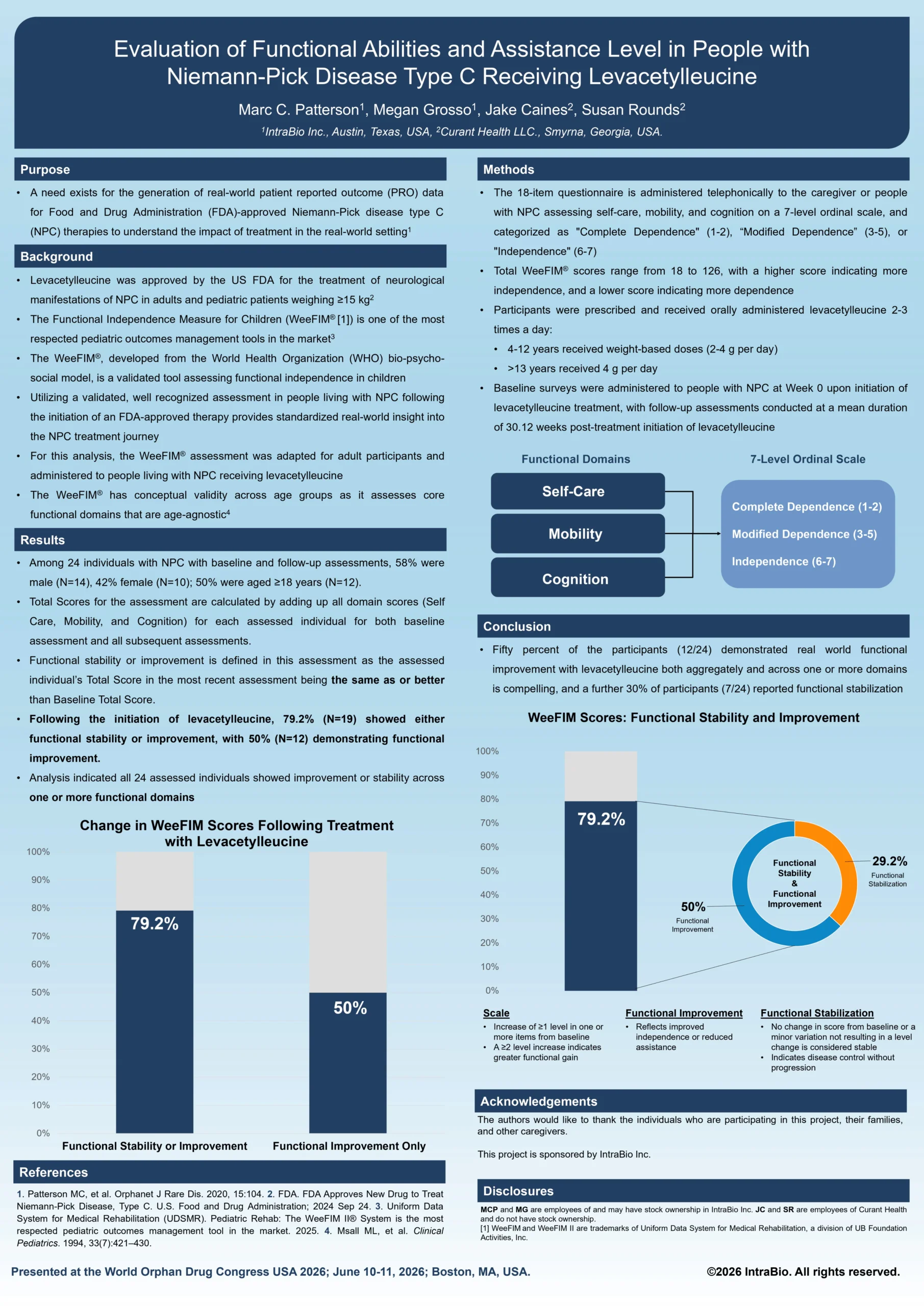
Real-world data is essential to understanding how therapies perform beyond clinical trials, particularly in rare diseases like Niemann-Pick disease type C (NPC). As healthcare increasingly prioritizes evidence that reflects everyday patient experience, the need for meaningful patient-reported outcomes continues to grow. In collaboration with IntraBio, Curant Rare developed a first-of-its-kind real-world evidence (RWE) system that is delivering unprecedented NPC insights to the scientific community. Last week, our teams presented a poster at the World Orphan Drug Congress demonstrating how real-world evidence can deepen clinical understanding and inform treatment discussions in NPC.
Using the WeeFIM scale, a validated outcomes management tool based on the World Health Organization’s bio-psycho-social model, caregivers and individuals with NPC provided valuable insight into self-care, mobility, and cognition. Leveraging this standardized and widely recognized framework enables consistent measurement of functional change over time while strengthening the credibility of real-world findings.
The results highlight the value of real-world evidence in evaluating therapeutic impact in NPC. By transforming everyday patient experiences into structured, validated data, this work supports more informed clinical decision-making and advances ongoing research efforts.
World Orphan Drug Congress 2026 Poster Presentation: Evaluation of Functional Abilities and Assistance Level in People with Niemann-Pick Disease Type C Receiving Levacetylleucine